From the session to the real context: why improving at the drill isn't enough
Improving at the training task is easy and often irrelevant. The only question that matters is whether that change shows up when the situation is real and nobody announces that it's starting.
Article contents
Any repeated task improves. It's a basic property of the nervous system: with enough practice, almost anyone becomes faster and more accurate at almost any drill. The problem is that this improvement, on its own, says nothing. It could reflect a genuine functional gain, or simply that the subject has learned that particular task, with its rhythm, its format and its implicit cues.
Telling those two possibilities apart is the difference between a programme that works and a programme that produces attractive charts. And separating them requires designing for transfer from day one, not checking for it at the end.
What transfer actually is
Transfer means an improvement obtained on one task shows up on a different, untrained one. Near transfer usually refers to a target task closely resembling the trained one; far transfer, to one sharing little beyond the underlying mechanism.
The general evidence in perceptual and cognitive training is fairly consistent on one point: near transfer is common, far transfer is difficult and shouldn't be assumed. That's not an argument against training; it's an argument for designing it close to the demand you want to improve.
The three reasons transfer fails
1. The task was learned, not the function
When a drill is always repeated identically, the system finds shortcuts. It learns the rhythm, anticipates the order, memorises the pattern. Performance rises while the mechanism you intended to train barely worked. It's the most common failure and the easiest to avoid: introduce genuine variability in the conditions that aren't the drill's target.
2. The demand that defines the real context is missing
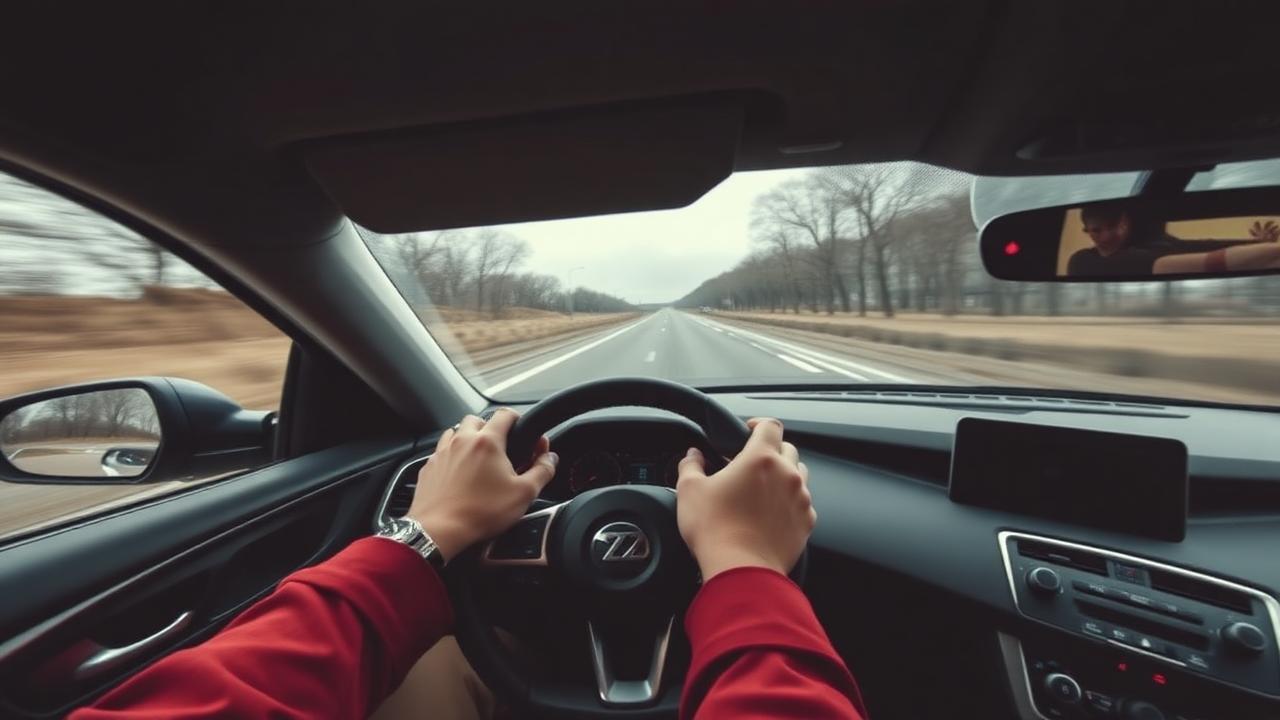
A flawless saccade executed seated, in silence, with no time pressure and no consequences bears little resemblance to one executed standing, off balance, in noise, while deciding. The mechanism is the same but the execution context completely changes the resources required. If contextual demand never appears in training, there's no reason to expect the system to handle it better.
3. Progression came from volume rather than quality
Adding repetitions is the easiest way to simulate progression and the one that adapts least. A system executing badly a hundred times consolidates the compensatory pattern. Useful progression changes task difficulty — unpredictability, speed, parallel load — not duration.

Conditions that do favour transfer
Four factors show up consistently when transfer does occur, and all four can be designed in.
- 01Mechanism specificity. Identify which concrete function is the bottleneck and work on that, not on a general category. “Improve vision” isn't a goal; “reduce corrective saccades in the diagonal plane” is.
- 02Structured variability. Keep the target mechanism constant and vary everything else: amplitude, rhythm, direction, body position, visual context. Variability blocks the shortcut and forces generalisation.
- 03Progression of context, not volume. Clean isolation → motor load → cognitive load → specific context. Each step only once the previous one is stable.
- 04High frequency and short sessions. Consolidation benefits far more from distributed exposure than from long, spaced sessions. Ten minutes daily clearly beats one hour weekly.
Frequency deserves emphasis because it's the most decisive variable and the one most often sacrificed. A mediocre protocol executed daily produces more adaptation than an excellent protocol executed twice a week. Adherence isn't a logistical detail: it's a design variable.
How to measure whether transfer happened
Without measurement there's no way to distinguish real improvement from task learning. The minimum scheme has three levels and needs no complex instrumentation.
- Level 1 — performance on the trained task. The least informative, but it verifies that the dose was sufficient and execution correct.
- Level 2 — an untrained task using the same mechanism. Real information starts here. If level 1 improves but level 2 doesn't, the drill was learned.
- Level 3 — a real-context indicator. A marker specific to the situation that motivated the work: reaction time in the specific movement, second-half consistency, number of corrections in a real task.
Level 3 is the deciding one, and also the hardest to isolate because many variables act in the real context. That's why it's better to pick a narrow, stable indicator measured under the same conditions rather than trying to capture overall performance.
How this is structured at R10Method Neuro
The method is organised in four phases precisely because transfer doesn't happen through accumulation, but through ordered progression.
- 01Assessment. Determine which concrete function limits performance in that person's specific context. Without this, everything else is generic.
- 02Activation. Isolated, high-quality work on the deficient subsystem. Short blocks, a clean-execution criterion, no unnecessary volume.
- 03Integration. The same function under motor and cognitive load: locomotion, head rotation, dual task, decision with inhibition.
- 04Transfer. Reproduce the temporal structure and uncertainty of the real context, and measure the level 3 indicator.
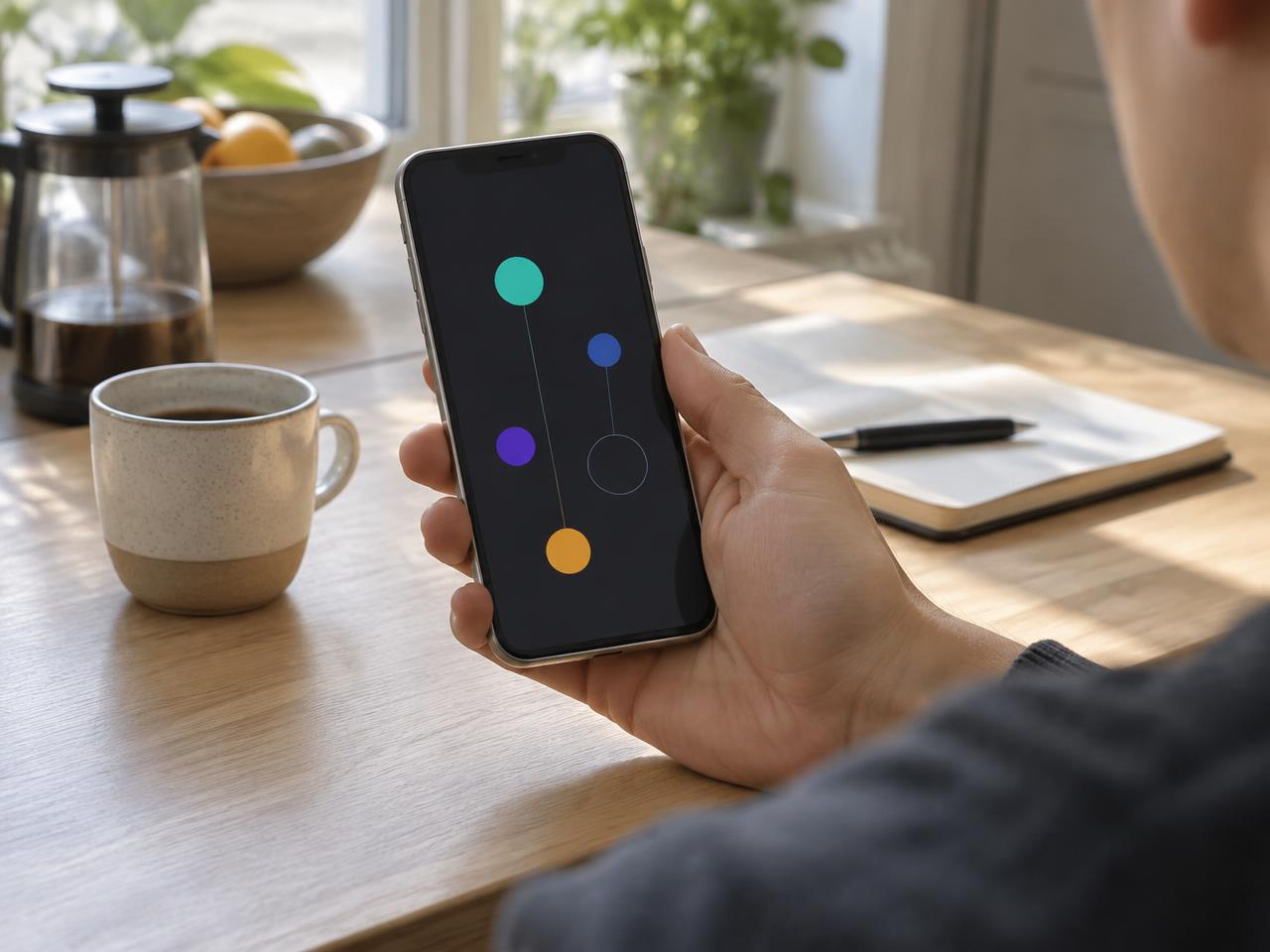
The virtual environment fits this scheme for one concrete reason: it allows precise manipulation of variability and uncertainty — the hardest thing to achieve with analogue material — and records every repetition, which is what makes it possible to progress on data rather than on feel.
Closing
The question that should run through any neurofunctional training programme is uncomfortable and simple: if this improves, where exactly will I notice it, and how will I verify it? A programme that can't answer that isn't training a function, it's administering drills.
Designing backwards from that answer — from real context to mechanism, and from mechanism to drill — is what turns the work into performance instead of activity.
Improving at the drill is easy. The only question that matters is whether it shows up when nobody announces the situation has started.
How we work on this at R10Method Neuro
We design every protocol backwards from the real context and measure on three levels to separate functional improvement from task learning. Short daily sessions from home, and a progression that only advances when execution is clean.
Explore the system